
Project Description
Theoretical Framework
Defining Literacy Practices
Rapid technological and social changes in contemporary societies have led to a redefinition of the role of education and, consequently, of the very concept of literacy (Cope & Kalantzis, 2000, pp. 5-8). Until the end of the twentieth century, literacy was primarily defined as the ability to read and write in the dominant language variety, an understanding that treated language as a neutral skill and overlooked the social and cultural contexts in which it is used (Gee, 2008, p. 31). However, new technological, communicative, and multicultural conditions revealed the limitations of this decontextualized definition. It thus became evident that literacy is not merely a set of neutral technical skills but is closely linked to the characteristics of the sociocultural environment in which it develops and is practiced (Baynham, 1995, p. 1). As a result, the concept acquired a strong social and cultural dimension and began to be viewed as a complex social practice. Literacy can no longer be studied independently of the various social contexts in which it develops; rather, it is examined through specific contexts of use, that is, through particular literacy practices (Baynham, 1995, pp. 39, 54; Gee, 2008, pp. 42-43).
In our study, we focus on the literacy practices of students, specifically on their in-school and out-of-school literacy practices. This distinction is conventional and is made on the basis of the social settings in which these practices occur (Baynham, 1995, p. 40). Therefore, we approach children’s out-of-school literacy practices within the home environment, which constitutes their primary space of socialization and the expression of their interests. We assume that characteristics of the home environment (e.g., available technology, language, family culture) directly influence students’ out-of-school literacy practices. Correspondingly, children’s in-school literacy practices are situated within the school context, which is primarily shaped by curricula, educational materials, and the ways in which these are implemented by teachers.
The home-school mismatch hypothesis
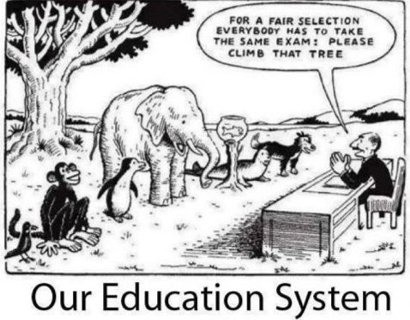
Numerous international studies have investigated students’ in-school and out-of-school literacy practices (see the section Further Reading). Their findings indicate the existence of a mismatch between the two (known as the home-school mismatch hypothesis; Luke, 2004), as schools often overlook children’s interests related to the digital world and popular culture, while continuing to emphasize traditional literacy practices, such as reading and writing texts associated with dominant and “high” culture (see, for example, Tsami et al., 2014; Kalantzis & Cope, 2012). Furthermore, the continuous changes occurring in contemporary society, combined with the relative inertia of educational systems, widen the gap between school-based and out-of-school literacy practices (see, for example, Cope & Kalantzis, 2000).
The consequences of the mismatch between school-based and out-of-school literacy practices can be observed both within the classroom and at the broader societal level. First, learning that neither begins from nor is oriented toward children’s lived realities cannot be considered authentic. As a result, students’ motivation to participate is reduced when they fail to recognize their own social reality in the learning materials provided (Kalantzis & Cope, 2012, p. 160).
Moreover, inequalities among students are perpetuated because particular dominant models of literacy are privileged. Consequently, children whose home environments have not familiarized them with the literacy practices valued by schools are marginalized. These may include students from cultural, social, economic, or linguistic minority backgrounds (Bernstein, 1990; Heath, 1983).
Therefore, the issue of incompatibility between school and home is not merely educational; it is fundamentally social and is directly connected to questions of equality of opportunity. Rather than functioning as a mechanism for transforming existing social power relations, schools, through this observed mismatch, appear to operate as mechanisms for their reproduction.

References
Baynham, M. (1995). Literacy Practices: Investigating Literacy in Social Contexts. Longman.
Bernstein, B. (1990). Class, Codes and Control: The Structuring of Pedagogic Discourse. Routledge.
Cope, B., & Kalantzis, M. (2000). Multiliteracies: Literacy Learning and the Design of Social Futures. Routledge.
Gee, J. P. (2008). Social Linguistics and Literacies: Ideology in Discourses. Routledge.
Heath, S. B. (1983). Ways with Words: Language, Life and Work in Communities and Classrooms. Cambridge University Press.
Kalantzis, M., & Cope, B. (2012). Literacies. Cambridge University Press.
Luke, A. (2004). On the Material Consequences of Literacy. Language & Education, 18(4), 331-335.
Tsami, V., Archakis, A., Fterniati, A., Papazachariou, D., & Tsakona, V. (2014). Mapping Elementary School Students’ Preferences for Mass Cultural Literacy Practices. In 1st International Conference: Education Across Borders (pp. 361–371), Florina, Greece, 5-7 October 2012.
Project Objectives
Based on the above, it becomes evident that the creation of student-centered and inclusive educational environments requires teachers who are open to and positively disposed toward exploring and incorporating their students’ interests into the learning process. Accordingly, the primary aim of our project is to support teachers in investigating their students’ out-of-school and in-school literacy practices and in bridging the gap between these two contexts. To this end, our team has developed a user-friendly and methodologically grounded online toolkit, with the following objectives:- To facilitate the integration of students’ out-of-school literacy practices into classroom teaching.
- To empower teachers to act as researchers and ethnographers of their students’ literacy practices.
- To encourage the exploration of students’ literacy practices from multiple perspectives.
- To raise awareness of the social and educational significance of aligning the literacy practices cultivated at home with those promoted at school.
- To promote teachers’ critical reflection on their pedagogical and institutional roles.
Research Contribution and Innovation
As already noted, the primary objective of this project is the development of an online toolkit that will support teachers in investigating and ultimately bridging the gap between their students’ school-based and out-of-school literacy practices.
At the research level, we expect that this project will contribute to the study of students’ literacy practices and their comparison through its implementation:
- in a variety of educational settings,
- with diverse groups of students,
- across a wide range of subject areas, and
- within different cultural contexts.
We consider this contribution particularly significant for two reasons. First, the number of studies addressing contemporary literacy practices remains relatively limited. Second, the findings of such studies tend to have only temporary validity, given the rapid pace of social, technological, and cultural change. More broadly, we believe that the findings of our research can contribute to educational policymaking by providing incentives and evidence for the improvement of educational systems.
At the educational level, our research is expected to support teachers in rethinking school education by placing the needs and interests of all students at the center of the learning process. In this sense, our project promotes student-centered and inclusive education, contributing both to the effective achievement of learning objectives and to the creation of a more equitable educational environment.
At the broader social level, we seek to challenge stereotypes that associate schooling and literacy primarily with texts belonging to “high culture,” that is, texts traditionally regarded as more refined, of greater quality, and of higher cultural value, such as those included in the literary canon (Bourdieu, 1984). Such stereotypes devalue children’s everyday experiences by overlooking their engagement with texts of “popular” or “mass” culture and by undermining efforts to incorporate these texts into educational practice. These assumptions also hinder equality of opportunity in education by disadvantaging children whose linguistic and cultural backgrounds do not align with those privileged by the educational system. Consequently, a further aim of this research is to combat social inequalities, promote equality of opportunity, and denaturalize dominant forms of literacy that are often taken for granted.
Finally, the innovation of our project lies in the development and online dissemination of a practical toolkit in three languages (Greek, English, and Spanish). This toolkit incorporates into educational practice the research-based understanding that teachers play a crucial role in bridging the gap between home and school. The neglect or devaluation of children’s out-of-school interests and literacy practices by schools, as well as the consequences of such attitudes, have been highlighted in numerous international studies. For this reason, the present research constitutes an innovative and highly relevant contribution, offering significant potential for both educational practice and future research.
References:
Bourdieu, P. (1984). Distinction: A Social Critique of the Judgement of Taste. Harvard University Press.
Project Implementation Timeline
Our project, entitled “Bridging In-School and Out-of-School Literacy Practices: A Useful Online Toolkit for Teachers,” is being implemented under the auspices of the Educational Lab Project of the Ingenium European University, through a collaboration between the University of Crete and the University of Oviedo.
- Following the acceptance of our research proposal in March 2026, our research team devoted three months to reviewing the relevant literature and developing the toolkit (see the section Online Toolkit).
- Subsequently, the present website was designed and developed, and the project materials and texts were uploaded to the appropriate sections.
- In June 2026, the team from the University of Crete successfully participated in the ARLE/IFTE 2026 Conference in Barcelona, presenting part of the project online.
- In early July 2026, the University of Crete team visited the University of Oviedo team in Oviedo, Spain. As part of our collaboration meeting, we also visited rural schools in the Principality of Asturias.
- In September 2026, the team presented the project in an online webinar organised within the framework of the INGENIUM Alliance.
- The University of Crete team published the scientific article: https://www.ijlter.org/index.php/ijlter/article/view/18467
- The University of Oviedo team visited the University of Crete team in Rethymno, Crete. During the meeting, we finalised our website, reflected on the project and discussed the next steps.
- At the end of October 2026, the University of Crete team presented the online toolkit at the III Jornadas Internacionales de Innovación Docente 2026 in Seville.